A Triangle Floor Drain can give a shower a cleaner, more deliberate look, but shape alone does not make it the best choice. In 2026, the right model still depends on your shower layout, waterproofing system, and expected water flow. A well-sized drain should sit neatly within the floor design and allow water to move toward it without lingering around the edges. Small details matter.
This guide looks beyond polished product photos. It explains how to compare drainage capacity, grate materials, outlet position, cleaning access, and compatibility with your installation. We’ll also consider practical issues, such as whether hair collects in the corners and whether the grate lifts out easily for routine maintenance. Check product specifications against your plumber’s advice; a stylish drain is not automatically suitable for every floor.
There is no universal winner. A compact shower may need a different configuration from a wide, open wet room, and local installation conditions can change what works. This guide offers clear selection criteria rather than pretending one product fits every home. Some comparisons may still leave trade-offs unresolved. That is worth acknowledging. Before buying, confirm the drain’s dimensions, outlet connection, and stated flow rate with the manufacturer, then match those details to your project.
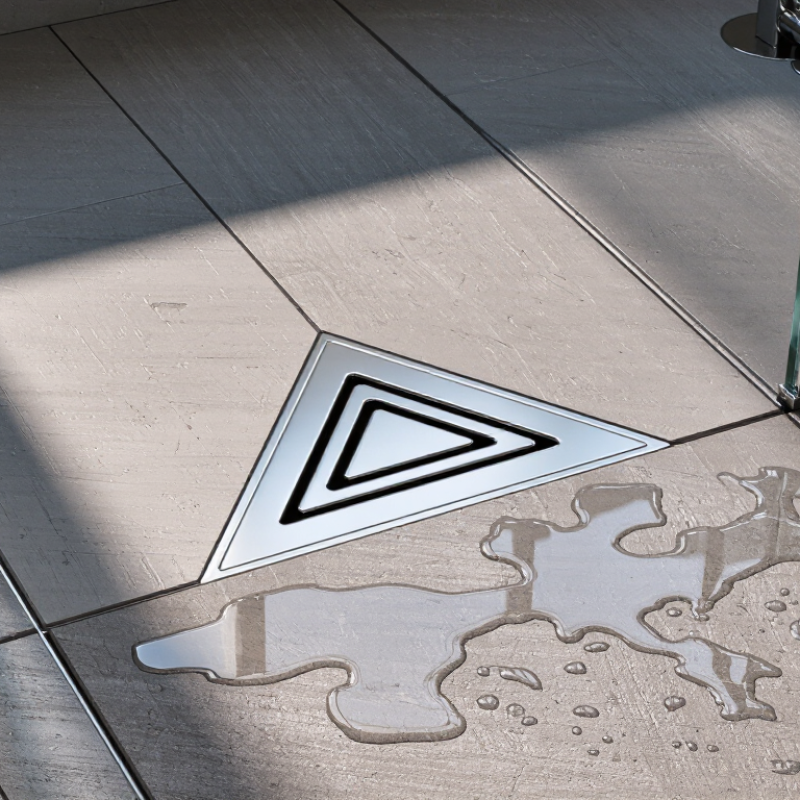
A triangle floor drain is a floor-drain fitting with a triangular grate or body, often placed in a shower corner. Its shape can help use space where two walls meet. Beneath the visible cover, a drain body directs water into a waste pipe. Many installations also include a trap that holds water and helps block sewer odors. The grate catches larger debris, while water passes through its openings.
Simple, but the details matter.
Water does not get pulled down by the drain; a properly sloped floor guides it there by gravity. The drain’s outlet then carries it into the plumbing system. If the floor is nearly flat, water may linger beside the grate. That can happen even with a well-made fitting.
When comparing options, check the outlet size, drainage capacity, grate access, and compatibility with the floor’s waterproofing. A removable cover makes hair and soap residue easier to clear. Measure the corner carefully, too: a triangular outline does not guarantee that every model fits the same space. Installation details vary, so confirm the drain’s requirements before choosing it. The best fit is the one that drains reliably and can be cleaned without a struggle.
A triangle floor drain has to do more than fit neatly into a corner. Its material and construction determine how well it handles standing water, cleaning, and daily foot traffic. Stainless steel is practical for many bathrooms; 304 grade suits ordinary indoor use, while 316 offers better resistance to chloride exposure. Brass can also last well, but its coating may wear. Looks are not proof.
A thick, rigid grate resists bending better than a thin stamped cover. Check the edges and welds: rough seams can trap grime and become early corrosion points. A removable hair basket helps, too. Small detail. It makes routine cleaning easier and reduces the chance of mistaking a slow drain for a design flaw. A brushed finish often hides scratches better than a mirror polish, though neither can compensate for weak metal underneath.
Design matters as much as the alloy. A properly sloped channel should guide water toward the outlet without leaving shallow puddles in the corner. A secure, replaceable seal and accessible trap help limit leaks and odors. Check whether the grate can handle the expected load, especially where people may step on it. Installation still matters; even a durable drain can fail if its waterproofing connection is rushed. I would compare thickness, joints, and spare-part access before trusting a glossy product photo. That takes more effort.
A triangle floor drain can clear water efficiently, but its shape alone proves little. Performance depends on outlet diameter, channel design, grate openings, and the connected waste pipe. Compare the drain’s stated flow rate with the likely water load, especially in a large shower or wet room. Check the figures carefully. A narrow pipe can restrict a high-capacity drain.
Installation matters just as much. Position the drain where water naturally collects, then form a consistent floor slope toward it. Even a small low spot can leave a shallow puddle beside the grate. In a corner, a triangular body may simplify tile cuts, but measure the actual drain and grate before setting out tiles. Small differences matter.
The waterproofing layer must connect securely to the drain assembly, with no gaps around the flange or outlet. Follow the installation instructions and test the drain with water before finishing the floor. Watch how quickly water clears, and inspect nearby joints for leaks. A perfect-looking grate is not enough. I would still question any capacity claim that lacks a clear test basis; room size, pipe layout, and installation quality can change the result.
A useful 2026 comparison starts with drainage capacity, not the triangular shape. Check the stated flow rate, outlet size, trap arrangement, and installation depth. The U.S. EPA’s WaterSense program sets a 2.0-gallons-per-minute limit for labeled showerheads; the federal standard for most showerheads is 2.5 gallons per minute. These figures describe incoming water, not drain performance. Still, they help frame the demand a drain must handle, especially when a shower has multiple outlets. Ask for tested capacity and confirm it suits the shower layout.
Tips: Compare grate dimensions with tile cuts. Check whether the strainer lifts out easily. Small details matter.
Material, corrosion resistance, and cleanability also affect long-term use. A removable basket can make hair and soap buildup easier to clear. The 2024 International Plumbing Code sizes drainage using fixture units and pipe conditions, so outlet diameter alone does not establish suitability. Verify the drain’s installation requirements with a qualified installer. A polished product photo cannot show whether the body fits the floor depth; that detail is easy to overlook, and specifications may not answer every site-specific question.
A triangle floor drain can suit bathrooms where a square grate feels too large or interrupts the tile pattern. The best choice depends on the shower’s footprint, water flow, and cleaning routine. In a compact corner shower, a small drain may preserve more visible tile. For a larger walk-in shower, check that its rated flow can handle the showerhead’s output. A neat shape alone is not enough.
Households with children or older adults may prefer a stable, flush grate with openings that do not catch toes. If hair is a regular nuisance, choose a model with an accessible debris basket or removable top. Check that the drain matches the pipe size and waterproofing system, and ask an experienced installer to confirm the floor slope. A drain can look perfect on paper and still feel awkward once tile lines meet it. Measure twice.
Tips: Place the drain where water naturally gathers, not just where it looks balanced. Check the tile cut around each edge before installation. Small details matter. Rinse the grate and trap regularly, and make sure the cover lifts easily without a special tool.
It is a floor-drain fitting with a triangular grate or body, often placed in a shower corner. A trap may hold water to help block sewer odors.
A sloped floor guides water toward the grate by gravity. The drain does not pull water in. Flat spots can leave puddles.
Not by itself. Flow depends on the outlet, grate openings, channel design, and connected pipe. Shape helps with corner placement, but that is only part of the story.
Check the outlet size, stated flow rate, grate access, and waterproofing compatibility. Measure the corner and drain carefully. Small differences matter.
Form a consistent slope toward the drain so water does not collect beside the grate. Even a shallow low spot can hold water.
Test it with water before finishing the floor. Watch how quickly water clears, then inspect nearby joints for leaks. Do not skip this.
The waterproofing layer should connect securely to the drain assembly, without gaps around the flange or outlet. Follow the installation instructions.
No. A narrow waste pipe may restrict flow, and room size or installation can change results. I would question a rating without a clear test basis.
A Triangle Floor Drain is designed to collect water from a corner or shaped section of a bathroom floor and guide it into the waste pipe. Its performance depends on more than its outline: material quality, corrosion resistance, a secure grate, and a well-fitted trap all influence durability and everyday maintenance. Smooth surfaces and accessible components can also make cleaning easier and help limit blockages.
When comparing options in 2026, consider drainage capacity, compatibility with the floor and plumbing, installation requirements, and how easily the drain can be maintained. The right choice depends on the bathroom’s layout and expected water flow. A compact design may suit a small shower area, while a higher-capacity model may be preferable where water use is heavier. Careful measurement and correct floor slope help ensure reliable drainage.

Xianglong