A floor drain is easy to ignore until water stands around your feet. Then, material quality, drainage capacity, and installation accuracy become impossible to overlook. This guide explores seven practical tips for choosing a Durable Floor Drain for homes, commercial kitchens, bathrooms, basements, and industrial areas. The right choice should manage water efficiently, resist corrosion, and remain accessible for cleaning.
Industry guidance supports a careful approach. ASME A112.6.3 establishes performance requirements for floor and trench drains, including drainage and structural considerations. ASTM standards also help evaluate materials, load resistance, and installation performance. These references matter because a drain may face repeated foot traffic, cleaning chemicals, temperature changes, and trapped debris. The U.S. Environmental Protection Agency reports that household leaks can waste nearly 10,000 gallons of water annually. A poorly sealed or blocked drain can worsen that waste and create costly moisture damage.
Small details decide long-term performance. A stainless-steel grate may suit wet, busy areas, while cast iron can provide strength under heavier loads. Drain size must match the expected flow, not merely the pipe diameter. The surrounding floor also needs correct slope. Experience shows that even an excellent product can fail when the trap, waterproofing, or flange is installed carelessly. That point deserves honesty. “Durable” is not permanent. Maintenance still matters. Before comparing models, check applicable local plumbing requirements, manufacturer test information, warranty terms, and replacement-part availability. These seven tips will help connect technical evidence with real installation conditions, so your final choice is safer, cleaner, and more dependable.
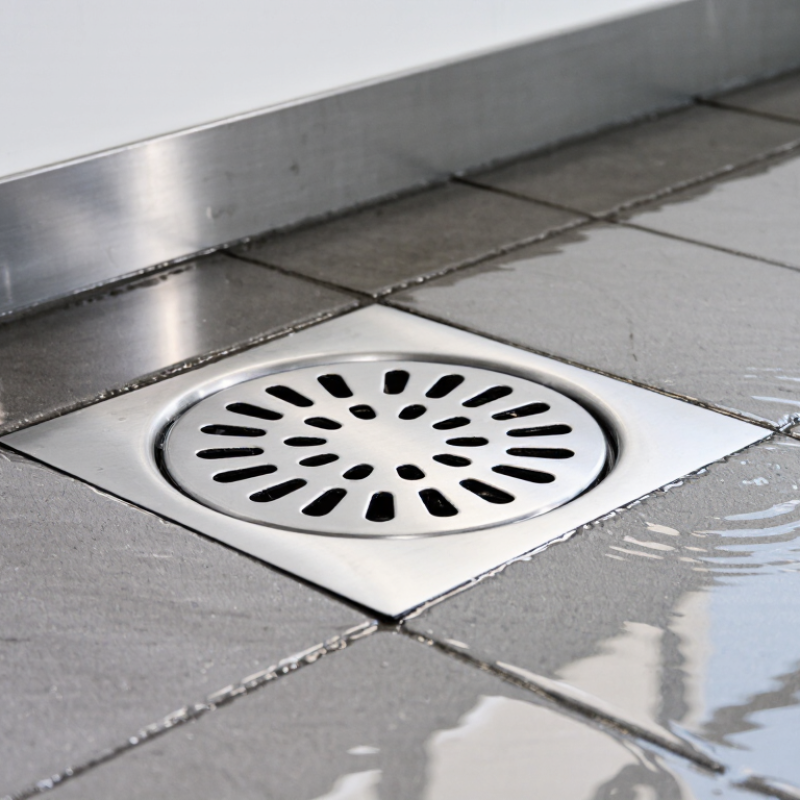
7 Tips for Choosing a Durable Floor Drain
Identify the Floor Drain’s Location, Purpose, and Drainage Demands
A durable floor drain begins with its location, not its finish. A basement drain may face slow seepage, while a commercial wash area handles repeated surges. A garage needs resistance to grit, oil residue, and temperature changes. An experienced installer checks the slab slope, nearby fixtures, cleaning access, and expected discharge rate before choosing the drain body.
Drainage demand must match the outlet and trap. The 2021 International Plumbing Code, Table 709.1, uses drainage fixture units to estimate wastewater loads. ASPE’s Plumbing Engineering Design Handbook also bases sizing on probable flow, not appearance. A small drain can look strong yet surcharge during equipment cleaning. That failure is inconvenient and expensive.
Think beyond the grate. EPA WaterSense reports that household leaks can waste nearly one trillion gallons of water annually in the United States. A properly sealed connection helps limit hidden losses, although a floor drain cannot solve every plumbing leak. I have seen projects select a drain by diameter alone. That shortcut often ignores cleaning chemicals, foot traffic, and sediment.
Choose a grate that suits the area. Narrow openings reduce debris entry, but they may clog faster. Removable components matter. So does corrosion resistance. Check the manufacturer’s tested load rating and installation instructions, then compare them with real site conditions. Specifications are useful. Field judgment still matters.
A practical selection guide based on installation environment, drainage volume, maintenance needs, and long-term durability.
| Tip | Selection Dimension | Typical Location or Application | Drainage Demand to Evaluate | Durable Floor Drain Recommendation | Key Verification Point |
|---|---|---|---|---|---|
| 1 | Identify the Installation Location | Bathrooms, laundry rooms, balconies, garages, basements, utility rooms, commercial kitchens, and outdoor areas | Exposure to water, cleaning chemicals, temperature changes, dirt, grease, or outdoor weather | Choose a drain body and grate material that matches the environment. Corrosion-resistant stainless steel is suitable for many wet areas, while heavy-duty cast or coated metal designs may be appropriate for vehicle or equipment traffic. | Confirm the drain is approved for the intended indoor or outdoor installation conditions. |
| 2 | Define the Drain’s Purpose | Emergency overflow drainage, routine shower drainage, equipment discharge, wash-down areas, or condensate removal | Whether the drain handles occasional spills, continuous discharge, soap residue, food particles, or sediment | Select a standard residential drain for routine household water and a commercial or industrial floor drain when frequent wash-down, solids, or heavy use is expected. | Match the drain design to the expected frequency and type of discharge rather than selecting by appearance alone. |
| 3 | Estimate Required Drainage Capacity | Showers, laundry areas, plant rooms, commercial wash areas, and spaces with multiple water sources | Peak flow from faucets, shower fittings, washing machines, hoses, floor-cleaning equipment, or multiple fixtures operating at the same time | Use a drain with an outlet size and grate opening capable of handling the calculated peak flow. A larger outlet may be necessary when several fixtures discharge into one drainage point. | Compare the drain’s rated flow with the expected peak discharge and verify compatibility with the connected pipe size. |
| 4 | Select the Correct Drain Outlet Size | New construction, renovation projects, point-drain showers, and replacement installations | Available pipe diameter, vertical or horizontal outlet direction, installation depth, and connection method | Choose an outlet that matches the drainage piping or use a properly engineered transition. Common residential outlet sizes include approximately 50 mm and 75 mm, while larger systems may require larger connections. | Measure the existing pipe, outlet direction, and floor depth before ordering the replacement drain. |
| 5 | Check Load-Bearing Requirements | Pedestrian areas, garages, workshops, warehouses, public facilities, and areas used by carts or vehicles | Expected static and rolling loads, impact risk, traffic frequency, and whether the grate will be exposed to concentrated loads | Use a grate and frame with a load rating suitable for the actual traffic. Light-duty grates are generally intended for pedestrian areas, whereas vehicle or industrial zones require a higher load class. | Confirm the complete grate-and-frame assembly rating, not just the material or thickness of the grate. |
| 6 | Evaluate Odor and Pest Protection | Bathrooms, basements, utility rooms, commercial food-preparation areas, and seldom-used floor drains | Potential sewer gases, dry periods, debris entry, pest access, and the frequency of water replenishment in the trap | Choose a properly designed water trap or an approved mechanical trap-seal device where appropriate. Include a removable strainer or debris basket when hair, lint, or solids are likely to enter the drain. | Ensure the trap-seal solution is compatible with local plumbing requirements and can be cleaned or serviced. |
| 7 | Prioritize Maintenance and Long-Term Durability | High-use washrooms, kitchens, workshops, public buildings, and locations where access is difficult | Frequency of cleaning, exposure to chemicals, clogging risk, replacement-part availability, and access for inspection | Select a drain with a removable grate, accessible strainer, smooth internal surfaces, secure fasteners, and corrosion-resistant construction. Avoid designs that require demolition of the floor for routine cleaning. | Review cleaning instructions, material compatibility, spare-part availability, and the expected service life before installation. |
Check the lowest slab area, nearby fixtures, and expected water flow. A basement may face seepage, while a wash area handles sudden surges. The location decides more than the finish.
Compare the drain’s tested flow with showers, pumps, laundry equipment, or cleaning water. Consider pipe diameter and floor slope too. High capacity cannot fix poor installation.
Choose smooth openings that limit debris while allowing fast drainage. Very narrow slots may clog with hair, lint, or leaves. A suitable load rating matters in garages and utility rooms.
Yes, especially in basements, outdoor areas, and laundry rooms. A basket can catch sediment before it enters the pipe. It should lift easily without special tools.
Corrosion-resistant metal usually performs well in damp areas. Material thickness matters more than a shiny surface. Consider grit, cleaning chemicals, oil residue, and temperature changes.
Inspect the gasket for chemical and temperature resistance. It should sit evenly, without twists or visible gaps. Test the connection with controlled water before closing the floor.
Measure floor thickness, outlet direction, pipe diameter, and required slope. Confirm the drain body fits without forcing the pipe sideways. One missed dimension can create expensive repairs.
Leave clear space around the cover for cleaning and inspection. Blocked strainers often cause trouble before weak drain bodies do. I once underestimated access, and the mistake appeared during heavy rain.
No. A sealed connection may reduce hidden water loss, but it cannot repair other leaking pipes. Drainage performance depends on the whole installation, not diameter alone.
Choosing a Durable Floor Drain requires more than selecting a basic outlet for wastewater. Start by identifying where the drain will be installed, such as a bathroom, kitchen, basement, garage, or commercial area, and consider the expected water volume, temperature, debris, and frequency of use. Then evaluate the drain’s material, corrosion resistance, load-bearing strength, and ability to withstand moisture, chemicals, and daily impact. A reliable grate design, high drainage capacity, and clog-prevention structure can help maintain smooth water flow and reduce maintenance problems.
Also compare the sealing system, pipe connections, installation requirements, and compatibility with the existing floor and drainage network. Choose features that support a secure, watertight fit and simplify future repairs. Easy cleaning, slip-resistant surfaces, child-safe or debris-resistant grates, and appropriate safety certifications can add practical value. By considering durability, performance, installation convenience, hygiene, and long-term maintenance costs together, you can select a floor drain that provides dependable protection and efficient drainage for years.

 Xianglong